My historical novels Rebel Puritan and The Reputed Wife, Herodias (Long) Hicks Gardner Porter, colonial New England, travels, and whatever else seizes my fancy...
Showing posts with label Rhode Island. Show all posts

Sunday, July 21, 2013

Rhode Island's famous Hoydens and Firebrands

Anne Hutchinson's statue at Boston's State House
Hoydens and Firebrands is a superb blog devoted to "Roaring Ladies who write about the 17th Century." That would be me, and this week Hoydens and Firebrands are hosting me in a tale about Anne Hutchinson, Mary Dyer, and of course, Herodias Long. All three are noted 17th century Rhode Island firebrands, but Herodias is also notorious for her hoyden-esque life too! Please click on over to my post, and huzzah for Roaring Ladies!
 
http://hoydensandfirebrands.blogspot.com/2013/07/guest-post-jo-ann-butler.html

Friday, September 21, 2012

Why Herodias Long?


Jo Ann Butler

Why Herodias Long?
By Jo Ann Butler
Author of REBEL PURITAN and
THE REPUTED WIFE

I bear genes from Herodias Long and George Gardner passed from son to grandson, down to my maternal Grandma Gardner.  My genealogy research commenced with Grandma in 1978, and quickly led me to The Gardiners of Narragansett by Caroline Robinson.  There I found the George and Herodias as 1630s immigrants from England, but Herodias and her stormy life occupied far more space in the pages than George’s did.

Herodias and her first husband followed religious exiles from Massachusetts to Newport, Rhode Island.  She was married at the age of thirteen, but otherwise Herodias lived a modern life.  Unless they came from a powerful family, 17th-century wives were little more than the property of their husbands, and it was extremely rare for a woman to be granted a divorce unless she was abandoned.

However, Herodias was not afraid to pursue what she needed.  She petitioned for two divorces and was legally parted from both husbands after they proved unsuitable.  She acquired her own land (most female landowners were widows), and retained custody of some of her children.

I admire Herodias for her boldness and persistence, but particularly honor her for an act which does not appear in Rebel Puritan, the 2011 historical novel I wrote about her.  This incredible act of bravery is featured in my sequel, The Reputed Wife, which will be published in autumn, 2012.

Whipping Quakers in Boston
Missionaries from England’s Society of Friends first appeared in Boston in 1656, determined to bring their renewed faith to New England’s Puritans.  They were jailed, but when that did not discourage their acts of civil disobedience, both men and women were whipped with increasing savagery.

Herodias met the Friends – often called Quakers – through Mary Dyer, a Newport resident who had become a Quaker convert in England.  Though she may not have been a convert, Herodias walked fifty miles from Newport to Weymouth, Massachusetts to protest against the brutality, carrying a nursing infant in her arms.

Herodias, the Rebel Puritan
She had seen the wounds borne by Quakers whipped in Boston and New Haven.  She had met Humphrey Norton, whose hand was so deeply branded that he might never use it again.  She knew well that she might receive no mercy from Governor John Endecott and his Puritan magistrates and ministers.  And yet Herodias could not remain silent.

After speaking in Weymouth against the whippings, Herodias was arrested.  She and her maidservant were marched ten miles to Boston, where they were whipped on her naked backs in the street, then jailed for two weeks.

Herodias knew all of this could happen, and yet she spoke.  Some of her other acts scandalized her Rhode Island neighbors and her descendants, but for her courage I honor Herodias (Long) Hicks Gardner Porter.

Images:
Personal collection

Thursday, September 13, 2012

Why Mary Barrett Dyer?


Christy K. Robinson
My guest today is Christy K. Robinson, who is hard at work writing a novel about Mary Dyer.  Mistress Dyer is a well-known resident of Newport, Rhode Island, and is featured in my "Rebel Puritan."  I asked Christy what attracted her to Mary, and she can tell you in her own words:
 
Why Mary Barrett Dyer?

By Christy K Robinson

Historical fiction has been my favorite literary genre since I was a young girl. I’ve learned that several of my author friends read my favorite book series on the Childhoods of Famous Americans when we were kids, and it shaped our discovery of history and historical fiction by humanizing icons of history and making them accessible to children. It tickled our imaginations to learn about culture and what life might have been like for Virginia Dare, Martha Washington, or Abigail Adams, as children. (There were boys in the series, too, of course.)

Mary Dyer and Christy Robinson
My mother was chronically ill, and she drafted me to help her at genealogy and history archives with the fetch-and-carry jobs, or searching the reference files (you know, the little card drawers at the book place, that preceded the search engine). We traced many of our lines back through renaissance and medieval eras to European royalty. One of our most important discoveries in the 1970s was the confirmation that we were 11 and 12 generations descended from Mary Barrett Dyer, the 17th-century Quaker martyr. In the 1970s and 80s, we believed that Mary was hanged by those mean Boston Puritans for her religious beliefs, “simply for being a Quaker.” Unfortunately, that belief persists in countless web pages today.

Mary Dyer had several opportunities to avoid prison and execution. She could have lived her life in peace and safety, doing anything she wanted to, in Rhode Island, the colony she co-founded. But she intentionally returned to Boston several times to defy her banishment-on-pain-of-death sentence, until she forced their hand and they executed her. It’s not that she wanted to die, but that she was willing to die to shock the citizens into stopping their leaders from the vicious persecution of Quakers and Baptists. Whippings such as Herodias Gardner’s. Mary and other Quakers believed they were called by God to “try the bloody law,” the law that required torture, bankrupting fines, exile, and death for dissenters.

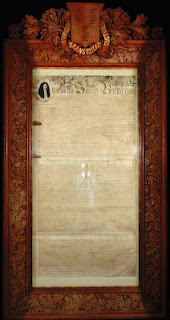
1662 Rhode Island charter
Mary’s sacrifice and civil disobedience worked. After her death in June 1660, a petition to King Charles II resulted in a cease-and-desist order to the Puritan theocracy in New England; and the king’s Rhode Island charter of 1662 (which replaced previous religiously-liberal charters) specifically granted liberty of conscience and separation of church and civil powers in Rhode Island Colony. One hundred thirty years later, the religious-freedom concept modeled by Rhode Island became part of America’s Bill of Rights to the Constitution.

Religious liberties (to practice religion or not without interference of the government) and those who would legislate their morality upon others still clash today, 350 years later. That’s one of the things that compels me to write of a strong-willed woman. Mary Dyer sacrificed her will and her life of ease and wealth, with husband, children, grandchildren, respect and influence for the good of hundreds of people in her own time, and untold hundreds of millions who came after her.

The genealogy hobby is inspiring, educational, and fun. I’m 32 generations down the tree from Eleanor of Aquitaine, Christy English’s muse. Eleanor’s son John was forced to agree to the Magna Carta, a charter of liberties which has been the model of constitutions around the world. On another line, I’m 12 generations down from Mary Barrett Dyer, whose sacrifice laid the groundwork for the human rights in the US Constitution. It’s fun to speculate what molecules of DNA have come down to me from those two, or from the thousands of other strong, resourceful, and intelligent women in the family pedigree. They’re the people whose actions and principles formed our society and culture today. They were not wimps. And neither are we. 


Christy K. Robinson is an author and editor whose book "We Shall Be Changed" was published in hardcover in 2010. She's currently researching and writing a historical novel on Mary Barrett Dyer, 1611-1660.  You can reach Christy at http://christykrobinson.com/#
Christy also has an excellent blog about William and Mary (Barrett) Dyer at http://marybarrettdyer.blogspot.com and I urge you to check it out!

Tuesday, June 26, 2012

Sometimes Cruel, but Never Unusual: Children’s Lives in the 17th Century


1670 Mason Children
The old rhyme goes, “Men may work from sun to sun; a woman’s work is never done.”   There is no doubt that our colonial forefathers worked hard in planting crops, cutting firewood, and hunting for food.   Their wives were equally busy, but what were children’s lives like in our country’s early days?  Their parents worked hard, but did children have an easy life?

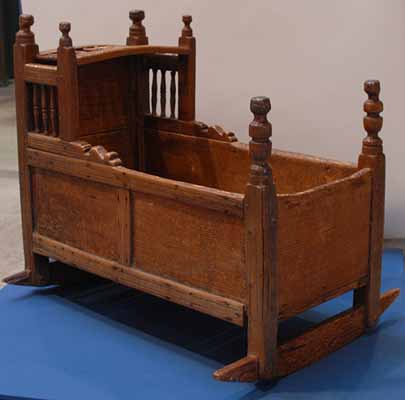
Pilgrim Cradle
They had to survive coming into the world, and what medical assistance was supplied to mother and child often did more harm than good.  Miscarriages and premature births often went unnoted, and in some communities, 30% of the children whose births and deaths were recorded died before their fifth birthday.

Young Mother's Tombstone
Hopefully the newborn’s mother would survive too.  It is estimated that 1 - 1.5% of pregnancies ended in the mother’s death, and throughout their lifetimes, 1 in 8 women died during pregnancy or childbirth.  A nursing mother passes crucial antibodies to her infant with the first milk produced after birth.  If she died, that child began life with a compromised immune system.  If the infant survived, it might be raised by another nursing woman – if one was available.

Three children in one tomb
A child who survived birth was taken to the meetinghouse a few days later for baptism.  In January, ice on the baptismal font would have to be removed first, then the baby was dunked in that frigid water.

Young children were assailed by disease, impure food and water, and accidents.  Cotton Mather, a Puritan minister in Boston, sired 15 children, 8 of which died before being weaned.  He wrote, "We have our children taken from us, the Desire of our Eyes taken away with a stroke."  40% of 17th century children did not become adults.

“In the midst of life we are in death” comes from the Book of Common Prayer.  Children learned that early, for they were often taken to public hangings for an object lesson in crime and punishment.  Funerals and wakes were held at home.  Hell awaited most children, or so they were told, for "their Hearts naturally, are a meer nest, root, fountain of Sin, and wickedness." (Benjamin Wadsworth)

Some cures were worse than the disease.  A child being treated for rickets (vitamin D deficiency) might be dosed with snakeroot and saffron steeped in rum, then dipped head first in cold water.  If that didn’t make the child sweat, “Let a little blood be taken out of ye feet…and that will cause them to sweat afterwards.”  Wearing wolf’s fangs might make the child’s teeth come in more easily, but that was less painful than scratching the child’s gums with an osprey bone.

The Capel family
Infanta Margarita
Both boys and girls wore linen gowns in their earliest years, similar to the one worn by Lady Capel’s baby.  When children were old enough to be ‘breeched,’ boys wore shirts & breeches like their father’s.  Girls were clad in miniature versions of their mother’s clothing.  Few children were so fortunate as to wear the stuff of the Infanta’s painting:

Boy Eating Porridge by Hals
Children ate and drank what their parents ate, including beer.  Milk was only available when cows had calves.  Water was considered to be an unhealthy drink.  Rightly so, when it was drawn downstream from a cow pasture or privy.

Girl With Broom - Fabritius
Childhood labor laws – what were they?  As soon as they were big enough to hold a broom, children worked alongside their parents.  They were not considered to be mouths to feed, but helping hands.  The more children a family had, the more likely that family was to prosper. 

Miss Campion with hornbook
In our country’s early days, formal education was a luxury for most boys, but it was sometimes available.  In 1640 Robert Lenthall was granted 100 acres of land in Newport, Rhode Island “for Encouraginge of ye poorer sort to trayne up their youthe in Learninge.”  The school was not successful, though, and Lenthall returned to England a few years later.  However, affluent children, both boys and girls, might be educated.  In this picture, Miss Campion holds a hornbook printed with the alphabet.

As early as age 10, many children were sent to work for another family, or were bonded to tradesmen as an apprentice.  An indenture could last a specific span, say, 5-7 years, until the age of 21, or perhaps until a girl married.  A boy could learn to be a tailor or cobbler, but there was great potential for abuse unless that child’s family was keeping an eye on him.

Children at Plimoth Plantation
Children did have some time for fun.  Marbles, tops, and pieces of ceramic dolls are turned up by colonial archeologists. King Charles I and his father both issued a Book of Sports, listing “lawfull Recreations and honest exercises” to be played “upon Sundayes and other Holy days, after the afternoone Sermon.”

Puritans were far stricter, but games for children were allowed – within reason.  In 1657, because several people had been hurt, boys who played “football in the streets” would be fined 20 shillings.  But they could play football, wicket, and other games on the Common.

17th century doll
Sampler by Loara Standish
Girls were taught household crafts, and perhaps that wasn’t as much fun as playing football.  But they also had dolls, including this early model.  It doesn’t look much like today’s Barbies, but with a dress, a painted face, and perhaps a wig, it would have provided a young girl with an hour’s entertainment.

It is clear from this blog that I have a liking for our country’s earliest days.  However, when I consider whether I’d rather have been a child in the 20th century, or the 17th, I am glad to have been born in modern days.

 
Sources:
Child Life in Colonial Days – Alice Morse Earle  1899
Customs and Fashions in Old New England – Alice Morse Earle  1893
Woman’s Life in Colonial Days – Carl Holliday  1922

Images:
Tombstones: personal collection
Velasquez’ Infanta Dona Magarita de Austria: http://www.wga.hu/html_m/v/velazque/10/index.html
Carel Fabritius’ “A Girl With a Broom”: http://www.traceyourdutchroots.com/art/bezem.html
Miss Campion with Hornbook: http://en.wikipedia.org/wiki/Hornbook
Sampler by Loara Standish: http://www.pilgrimhall.org/samplers2.htm

Friday, May 4, 2012

There be Witches Too Many


Witches in 1493
I recently had a book signing for my novel, Rebel Puritan, and I was asked whether my historical fiction is based in Salem during the witchcraft frenzy.  Though my novel takes place in 17th-century New England, it occurs mostly in Rhode Island several decades before the Salem tragedy.  However, I get many such questions.

I am now writing the sequel to Rebel Puritan, and my real-life protagonist, Herodias Long, apparently lived until 1705.  I admit that I searched through Rhode Island’s records for a case of witchcraft to use in Herodias’ story.  After all, fine Salem witchcraft tales, such as Kathleen Kent’s The Heretics Daughter and The Afflicted Girls by Suzi Witten, have attracted many readers.  Why not borrow some for my sequel? 

Rhode Island let me down.  Though there was a 1647 death penalty for witchcraft in Rhode Island, there were no executions.  There was not a single trial.  Not even an accusation!

Bringing a witch to justice
Witchcraft is as old as humanity, but I confine this account to colonial New England.  The Pilgrims brought Europe’s beliefs with them, and when they wrote a code of laws in 1636, one of the five crimes for which a person would be put to death was “forming a solemn compact with the devil by way of witchcraft.”

Puritans arrived ten years after the Pilgrims, and they also had stern witchcraft laws.  In spring 1647 John Winthrop, governor of Massachusetts, wrote in his journal, “One ___ of Windsor [CT] was arraigned and executed at Hartford for a witch.”  One year later, three Massachusetts women were convicted and executed.  As John Palfrey wrote, “These cases appear to have excited no more attention than … any other felony, and no judicial record of them survives.”

A Puritan witch
Margaret Jones was one of the executed women, and Governor Winthrop described some of the deathly evidence against her.  She had a “malignant touch” and persons whom she “stroked or touched with any affection or displeasure … were taken with deafness, or vomiting, or other violent pains or sickness.”  She used herbal remedies such as aniseed, which should have been harmless, yet had “extraordinary violent effects.”  And thirdly, Margaret told people that if they did not use her remedies, they would never be healed, and her predictions often came true.  Considering that doctors of the day used such dubious ingredients as mercury and snails, and relied on bloodletting, it’s amazing that anyone survived.

John Josselyn’s book, New England’s Rarities Discovered, was published in 1672.  He comments that in the region there be witches too many … that produce many strange apparitions if you will believe report.”  Notice the date: Josselyn’s book appeared two decades before the Salem witchcraft accusations.

Bridget Bishop's 1692 hanging
Witchcraft accusations, trials, and hangings occurred in the Puritan colonies of Massachusetts, Plymouth, Connecticut, and New Hampshire on a near-yearly basis.  The accusations came to a horrific climax in 1692 when 160 persons were charged with witchcraft.  Nineteen were hanged, and one was crushed to death in a futile attempt to make him plead guilty.

It didn’t take much to be suspected.  In 1656 Ann Hibbins was hanged in Boston, Massachusetts as a witch (contrary to popular belief, witches were not burned in America).  She met a pair of neighbors, and accurately guessed that they were talking about her.  Incredibly, that was enough to get her tried and executed.

Ann Hibbins’ husband died a year before she was tried.  That alone imperiled Goodwife Hibbins.  A goodly proportion of accused witches were middle aged women or elderly widows.  Festering ill-will often broke to the surface after a quarrelsome woman’s husband died.

Accusers and accused: witchcraft was a peculiarly female provenance.  Out of 116 persons on a list of accused witches, 37 were male.  79 of them were women, most of them elderly or middle-aged. Witchcraft accusations gave women a public voice they rarely possessed.  They accused and gave depositions, and acted out their possessions in court.  Ministers, governors, and judges treated them with respect, sometimes with deadly results.

A Monstrous Birth
Puritans were superstitious folk, and they examined every unusual event for its divine meaning.  An earthquake, bad storm, or a deformed newborn was a sign that God was very displeased.  It was up to them to figure out why.  If a witch was the reason for God's wrath, she would be dispatched, and quickly.

In contrast, look at Rhode Island, which was not Puritan.  Though over 300 persons were accused of witchcraft in17th century New England, only 3 of them were Rhode Island residents!!  Those three accusations weren’t even made in Rhode Island.

The 1640 accusation against Anne Hutchinson and two men of “Aquiday Island” widely cited online is merely a slanderous suspicion. John Winthrop, Massachusetts’ Puritan governor, wrote in his then-private journal that a Mr. Hales was so taken with Mrs. Hutchinson’s heresies that “it gave suspicion of witchcraft.”  If Rhode Island’s government was aware of Winthrop’s notion it took no notice.

So, why was Rhode Island immune to the witchcraft hysteria?  The people who lived there in the first 70 years were the same Englishmen who lived in Puritan Massachusetts and Connecticut.  They grew up with the same belief system and superstition brought over from England.  Where were Rhode Island’s accusations?

Anne Hutchinson's heresy trial
I suspect that the reason lies in Rhode Island’s origins.  Providence was first settled in 1636 by Roger Williams and a handful of followers who were ejected from Massachusetts as heretics and troublemakers.  In 1638-9 an influx of refugees arrived after Anne Hutchinson was convicted of heresy in Boston.  She was excommunicated and banished.  Several of her followers were also ejected, and many opted to escape Puritan persecution.  Nearly all went to Rhode Island, where they founded the towns of Portsmouth and Newport.

Rhode Islanders knew what it was like to experience baseless accusations and discrimination.  Tolerance was not just a notion – it was a way of life.  Quakers, Jews, Catholics, and Hugenots were welcomed in Rhode Island.  There certainly were disputes between neighbors in that tiny colony.  Thankfully they did not erupt into deadly accusations of witchcraft and Satan-worship.

Here is an incomplete list of witchcraft investigations from 1651 well into the 20th century:

History of New England  John Palfrey 1878
The Witchcraft Delusion in Colonial Connecticut  John M. Taylor
Entertaining Satan  John Putnam Demos 1982

Images from:

Related Posts Plugin for WordPress, Blogger...