My historical novels Rebel Puritan and The Reputed Wife, Herodias (Long) Hicks Gardner Porter, colonial New England, travels, and whatever else seizes my fancy...
Showing posts with label 17th Century. Show all posts

Sunday, July 21, 2013

Rhode Island's famous Hoydens and Firebrands

Anne Hutchinson's statue at Boston's State House
Hoydens and Firebrands is a superb blog devoted to "Roaring Ladies who write about the 17th Century." That would be me, and this week Hoydens and Firebrands are hosting me in a tale about Anne Hutchinson, Mary Dyer, and of course, Herodias Long. All three are noted 17th century Rhode Island firebrands, but Herodias is also notorious for her hoyden-esque life too! Please click on over to my post, and huzzah for Roaring Ladies!
 
http://hoydensandfirebrands.blogspot.com/2013/07/guest-post-jo-ann-butler.html

Tuesday, June 26, 2012

Sometimes Cruel, but Never Unusual: Children’s Lives in the 17th Century


1670 Mason Children
The old rhyme goes, “Men may work from sun to sun; a woman’s work is never done.”   There is no doubt that our colonial forefathers worked hard in planting crops, cutting firewood, and hunting for food.   Their wives were equally busy, but what were children’s lives like in our country’s early days?  Their parents worked hard, but did children have an easy life?

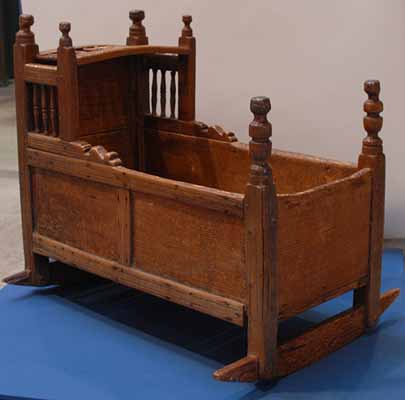
Pilgrim Cradle
They had to survive coming into the world, and what medical assistance was supplied to mother and child often did more harm than good.  Miscarriages and premature births often went unnoted, and in some communities, 30% of the children whose births and deaths were recorded died before their fifth birthday.

Young Mother's Tombstone
Hopefully the newborn’s mother would survive too.  It is estimated that 1 - 1.5% of pregnancies ended in the mother’s death, and throughout their lifetimes, 1 in 8 women died during pregnancy or childbirth.  A nursing mother passes crucial antibodies to her infant with the first milk produced after birth.  If she died, that child began life with a compromised immune system.  If the infant survived, it might be raised by another nursing woman – if one was available.

Three children in one tomb
A child who survived birth was taken to the meetinghouse a few days later for baptism.  In January, ice on the baptismal font would have to be removed first, then the baby was dunked in that frigid water.

Young children were assailed by disease, impure food and water, and accidents.  Cotton Mather, a Puritan minister in Boston, sired 15 children, 8 of which died before being weaned.  He wrote, "We have our children taken from us, the Desire of our Eyes taken away with a stroke."  40% of 17th century children did not become adults.

“In the midst of life we are in death” comes from the Book of Common Prayer.  Children learned that early, for they were often taken to public hangings for an object lesson in crime and punishment.  Funerals and wakes were held at home.  Hell awaited most children, or so they were told, for "their Hearts naturally, are a meer nest, root, fountain of Sin, and wickedness." (Benjamin Wadsworth)

Some cures were worse than the disease.  A child being treated for rickets (vitamin D deficiency) might be dosed with snakeroot and saffron steeped in rum, then dipped head first in cold water.  If that didn’t make the child sweat, “Let a little blood be taken out of ye feet…and that will cause them to sweat afterwards.”  Wearing wolf’s fangs might make the child’s teeth come in more easily, but that was less painful than scratching the child’s gums with an osprey bone.

The Capel family
Infanta Margarita
Both boys and girls wore linen gowns in their earliest years, similar to the one worn by Lady Capel’s baby.  When children were old enough to be ‘breeched,’ boys wore shirts & breeches like their father’s.  Girls were clad in miniature versions of their mother’s clothing.  Few children were so fortunate as to wear the stuff of the Infanta’s painting:

Boy Eating Porridge by Hals
Children ate and drank what their parents ate, including beer.  Milk was only available when cows had calves.  Water was considered to be an unhealthy drink.  Rightly so, when it was drawn downstream from a cow pasture or privy.

Girl With Broom - Fabritius
Childhood labor laws – what were they?  As soon as they were big enough to hold a broom, children worked alongside their parents.  They were not considered to be mouths to feed, but helping hands.  The more children a family had, the more likely that family was to prosper. 

Miss Campion with hornbook
In our country’s early days, formal education was a luxury for most boys, but it was sometimes available.  In 1640 Robert Lenthall was granted 100 acres of land in Newport, Rhode Island “for Encouraginge of ye poorer sort to trayne up their youthe in Learninge.”  The school was not successful, though, and Lenthall returned to England a few years later.  However, affluent children, both boys and girls, might be educated.  In this picture, Miss Campion holds a hornbook printed with the alphabet.

As early as age 10, many children were sent to work for another family, or were bonded to tradesmen as an apprentice.  An indenture could last a specific span, say, 5-7 years, until the age of 21, or perhaps until a girl married.  A boy could learn to be a tailor or cobbler, but there was great potential for abuse unless that child’s family was keeping an eye on him.

Children at Plimoth Plantation
Children did have some time for fun.  Marbles, tops, and pieces of ceramic dolls are turned up by colonial archeologists. King Charles I and his father both issued a Book of Sports, listing “lawfull Recreations and honest exercises” to be played “upon Sundayes and other Holy days, after the afternoone Sermon.”

Puritans were far stricter, but games for children were allowed – within reason.  In 1657, because several people had been hurt, boys who played “football in the streets” would be fined 20 shillings.  But they could play football, wicket, and other games on the Common.

17th century doll
Sampler by Loara Standish
Girls were taught household crafts, and perhaps that wasn’t as much fun as playing football.  But they also had dolls, including this early model.  It doesn’t look much like today’s Barbies, but with a dress, a painted face, and perhaps a wig, it would have provided a young girl with an hour’s entertainment.

It is clear from this blog that I have a liking for our country’s earliest days.  However, when I consider whether I’d rather have been a child in the 20th century, or the 17th, I am glad to have been born in modern days.

 
Sources:
Child Life in Colonial Days – Alice Morse Earle  1899
Customs and Fashions in Old New England – Alice Morse Earle  1893
Woman’s Life in Colonial Days – Carl Holliday  1922

Images:
Tombstones: personal collection
Velasquez’ Infanta Dona Magarita de Austria: http://www.wga.hu/html_m/v/velazque/10/index.html
Carel Fabritius’ “A Girl With a Broom”: http://www.traceyourdutchroots.com/art/bezem.html
Miss Campion with Hornbook: http://en.wikipedia.org/wiki/Hornbook
Sampler by Loara Standish: http://www.pilgrimhall.org/samplers2.htm

Monday, January 16, 2012

The Visible Woman


In my post of December 21st, I talked about invisible women during the 17th century, especially those wives whose unrecorded marriages left them unknown today.  So, if a woman’s name didn’t occur in vital records, or those records are lost, how did a woman become visible?

Anne Bradstreet.jpg
Some women left wills; others appeared in vital records.  A few who could write left their own records.  Anne (Dudley) Bradstreet’s book of poetry was published in 1650; the first work penned by a North American woman to be published.  Mistress Bradstreet’s work was notable, and perhaps she was protected by her position.  She was the daughter of Massachusetts’ governor, and no sensible man would criticize such a woman.

 The more typical attitude toward educated females is shown by Governor John Winthrop’s comment about a young woman who had “lost her reason” by “giving herself wholly to reading and writing.”  If she had not meddled in “such things as are proper for men, whose minds are stronger, she [would have] kept her wits, and might have improved them usefully and honorably in the place God had set her.”

Anne Hutchinson.jpg
Even such towering women as Anne (Marbury) Hutchinson and Mary (Barrett) Dyer left few recorded words.  The educated Mistress Hutchinson held her own meetings to discuss the sermons of Boston’s ministers.  Soon her followers nearly upended the Puritan’s government, leading to the banishment of Anne and her family, and the ouster of many other Massachusetts residents.

Mary Dyer helped bring the Quaker faith to New England.  For that she was also banished from Massachusetts, and was hanged in 1660 for defying that banishment.  But the only written works left by Mary are two letters written to the Puritan government before her hanging.  Nothing at all survives of Anne Hutchinson’s actual words, only a few brief phrases recorded during hearings preceding her banishment and excommunication.

Both Anne and Mary were remarked upon by Governor John Winthrop in his journal.  Anne and her supporters’ near-rebellion filled several pages, and Winthrop remarked upon her life in Rhode Island many times.  When Anne was cast out of the Boston church, Mary left the meeting house arm in arm with her friend, and Winthrop noted that event.  He also wrote about Mary’s miscarriage in gruesome detail – a monster borne by a woman with monstrous notions.

stocks.jpg
Thus we see that the most visible women in 17th century New England were those who got into trouble.  Even when they appear in the court records for lesser events we see their names, and sometimes we can learn quite a lot about them.

A significant portion of colonial records is filled with men and women in trouble.  Theft, adultery, social disorder, even murder were fairly frequent occurrences and women were often the criminals in question.  We might not learn a woman’s maiden name from these records, but sometimes they give her husband’s name along with information about her crime and punishment.

Herodias Long is a perfect example of how a woman can become visible.  If it weren’t for her numerous court appearances, we would know her only from a couple of land records.  In November 1664 George Gardner Jr. and his older brother Benoni were granted land in Rhode Island’s Pettaquamscutt Purchase.  That land was bounded on one side by Horad Long, but the deeds do not note that Horad was the mother of the young men, using a shortened form of her first name and her maiden surname.

 When John Porter, her third domestic partner, sold land between 1671-74, Horad Porter gave her consent.  Earlier land records for her first husband, John Hicks, and second partner, George Gardner, do not mention her at all.

So, how do we know that Herodias was married to those men?  She requested a divorce from both of them.  In 1644 Harwood Hicks was separated from her abusive husband, John Hicks.  We don’t learn much about her from those records apart from her name, but twenty years later, she petitioned the government for a divorce from her second “husband,” George Gardner, saying that they were not married, and that sin was weighing on her conscience.

Puritan wedding.jpg
Perhaps looking for sympathy and support for her youngest child, Herodias gave her life history.  Using her maiden name, Horod Long said that she was married at the age of thirteen at the church of St. Faith’s-under-Paul’s in London, that the Hicks family then came to Weymouth, Massachusetts for 2 ½ years, then relocated to Newport, Rhode Island.  She noted her separation from John Hicks, then said that she had not formally married George Gardner, and that omission was weighing on her conscience.

This sort of record is the sort that genealogists and historians dream about, and lets us trace this illiterate woman through most of her life.  If not for her troubled domestic life, Herodias would have remained nearly invisible, just another name written in fading ink on ancient parchment.

Friday, December 23, 2011

Christmas - a Sacrilege?

1660 Puritan anti-Christmas notice.jpg
It is fairly well known that the Puritans of England and of New England were not in favor of celebrating Christmas.  The notice to the right clearly states just what the Puritans thought of exchanging gifts and greetings, dressing in fine clothing, and feasting: It was a Sacrilege, and Satanic to boot!

I had intended to compose a timely summary of how the Puritans and their non-Puritan contemporaries in Rhode Island observed Christmas - or not - but Christy Robinson beat me to it!  I highly recommend that you check out her excellent post:  http://marybarrettdyer.blogspot.com/2011/12/mary-dyer-and-christmas.html

Jon Stewart.jpg
Instead, I researched the above notice.  It's been around on the Internet for a while, and Jon Stewart featured it on the Daily Show last week.  I wondered just when and where the document came from, or if it was authentic.

Some clicks and Googles later, I find the document ascribed to both Pilgrims and Puritans, somewhere in New England in the 1700s.  The most specific citation, and the one which is the most believable said that it was printed in Massachusetts in 1660.

The reason that I believe that citation was because I found the Massachusetts law forbidding Christmas celebrations on pain of a five-shilling fine.  It was enacted in October 1658.  So while a quick search didn't turn up exactly when and where the above document was printed, I did find the law that it cited, enacted two years earlier.  Below is a printout, which also demonstrates the Puritans' dislike of gaming with cards and dice, which were apparently popular activities during Christmas "feastivals."


1658 Puritan anti-Christmas law.jpg

The Massachusetts Puritans' law indeed ordered a five-shilling fine for observing Christmas.  So, be grateful that times have changed.  We can now legally take Christmas day off, feast and exchange gifts, and wear fancy clothes without being considered Satanic.  In that case, let me wish a Merry Christmas, and a Happy New Year to all of you!

Friday, November 18, 2011

What's in a Name?


What’s in a Name?

While I was writing my historical fiction novel, Rebel Puritan about Herodias (Long) Hicks Gardner Porter, the last thing I expected was that I would be called upon to defend my famous ancestor’s name.  After all, what other genealogical datum point is as constant as a person’s name?  As it turns out, even a name can be disputed.

 John O. Austin called my ancestor Herodias in his 1887 Genealogical Dictionary of Rhode Island Families.  Most genealogists - Caroline Robinson, Frederick A. Virkus, Clarence A. Torrey, and G. Andrews Moriarty – agree: our woman was named Herodias.

True, there is no “Herodias” in Rhode Island’s records.  She was called Horod, Horred, Harwood, and several other variants.  The only contemporary reference to “Herodias” was in an extract of her London marriage license, which was destroyed in World War II.  All that survives is that extract, which reads, “Mar. 14, 1637 Herodias Long married to John Hicks by license at St. Faith’s-Under-Paul’s.

A few months after Rebel Puritan was printed in 2011, I got an email from Gene Zubrinsky, FASG.  He said that it was very doubtful that Herodias was our woman’s actual name, citing a 2003 article by John Anderson Brayton.  The article argued that “[T]he name ‘Herodias,’ which as the result of modern finger-painting has become the name by which she is now known, does not appear in the literature until the nineteenth century, and there is no official reason to think that she was named other than Harwood.”
I had not seen Brayton’s article before.  It was in the journal of the North Carolina Genealogical Society in 2003.  While it is a respected publication, it is not where one ordinarily looks when researching New England.

I am grateful to Mr. Zubrinsky for bringing it to my attention, for it contained a vital document that I had missed.  Before he married Herodias Long in 1637, John Hicks made an allegation to a representative of the Bishop of London, swearing that he and the future Mrs. Hicks were of age and that the bride’s father gave his permission.  The record still exists:

Mar. 14, 1636  [1637 new style] “Wch daie, appeared p[er]sonally John Hicke of ye parish of St. Olaves in Southwark Salter and a batchelour aged about 23 yeares and alledged that he intendeth to marrie with Harwood Long spinster aged about 21 yeares ye daughter of William Long Husbandman who giveth his Consent to this intended marriage And of ye truth of the pr[e]mises as also that he knows of no Lawfull let or impediment by reason of anie pr[ior] contract Consanguinity affinitie or otherwise to hinder this intended marriage he made faith and desires license to be married in ye parish Church of St ffaith London [signed] John Hickes”

I will not address John Hicks’ fraudulent affirmation of Herodias’ age and parental consent in this note, although it is consistent with my portrayal of him in Rebel Puritan.  The vital point is that John called his bride “Harwood,” and that is what Zubrinsky says is our woman’s proper name.  He also feels that even if her birth name actually was Herodias, she used a shortened form, so it is “inappropriate” for any of us to call her Herodias.

It was apparently Joseph Warren Gardner, a 6th-generation descendant of Herodias, who supplied her name to John. O. Austin for his 1887 book.  Regarding the family’s memory of our woman’s actual name, Mr. Zubrinsky represents an exclusionist school of thought which assumes that “a fundamental principle of genealogical and historical analysis [renders such] unsupported pronouncements … untrustworthy.”  Though my heroine’s granddaughter (and two great-granddaughters) was also named Herodias, Mr. Zubrinsky believes that it was her daughter who created the name from Harwood as a more elegant version of her mother’s name. I disagree.

Herodias, through her fortunate alliance with John Porter and his huge tracts of land, made her children wealthy.  Her Gardner children were Porter’s heirs.  Her Hicks children also benefitted when William Haviland, who married Herodias’ first child, Hannah Hicks, was granted a substantial chunk of Porter’s land.  In 1705 Herodias’ Gardner children sold 400 acres of prime real estate, and sent the money to Thomas Hicks, Herodias’ first son.

It is my belief that Herodias’ descendants knew well what their notorious mother’s real name was.  She may not have divulged it to her family until late in her life.  But when the name Herodias was published in the 1880s, not one of her descendants complained in print that her name was actually Harwood or Horred, even those who were repelled by Herodias’ scandalous acts.  That, along with the extracted remnant of Herodias Long’s marriage license, gives me cause to believe that our woman was, indeed, named Herodias.

It is no wonder that she contracted her name to Horred.  In a highly religious society, the association with the biblical Herodias, who had instigated the death of John the Baptist, would have been very hard to endure.  The Herodias in the Bible controlled her own life in ways that horrified her contemporaries.  She broke biblical law when she abandoned her husband to marry his brother, and she obtained bloody revenge against a man who disparaged her in public.

Pretty shocking, but perhaps the biblical Herodias’ first husband gave her very good reasons for leaving him, left unrecorded by male scribes.  Most women in Biblical times were forced to remain with their first husband, no matter how unsuitable, and that attitude was still at work in the 17th century.

Herodias of Rhode Island and her biblical namesake both chose to leave their spouses.  And while we can’t condone the slaying of John the Baptist for his criticism, today we celebrate women who refuse to accept the status quo.  Think of Lady Godiva and her naked protest against her husband’s punitive taxes, Rosa Parks, and even Hillary Clinton, who was reviled for her prominent role during her husband’s presidency.

Like her notorious namesake, the Herodias of 17th century Rhode Island steered her life, separating from unsuitable husbands and speaking out against Puritan abuse of the Quakers.  I believe that if Herodias was alive now, she would celebrate her controversial name.  I can do no less.

Curious readers and Herodias descendants can find much more information about Herodias Long, including my sources and transcripts of articles about her family at: www.rebelpuritan.com/.


Friday, November 11, 2011

Herodias/Harwood (Long) Hicks vs John Hicks: A New Transcription

Herodias/Horod/Harwood Long is the protagonist of my historical fiction novel, A Scandalous Life: Rebel Puritan.  One of the most notorious women in 17th century New England due to her stormy domestic life, Herodias was separated from John Hicks after requesting Rhode Island's first divorce because of his abuse.

On December 3, 1643    Herodias complained to Rhode Island’s governor that her husband was beating her.  Probably she intended to have her petition heard by the General Court sitting in Newport at that time, but the Hickses' case was apparently not aired until the next spring.

Though Herodias and John Hicks were separated in some time after March 1644, Herodias’ accusation was not entered into the Rhode Island colonial records until 1655, when George Gardner was charged with keeping John Hicks’ wife as his own.


The following document from the Rhode Island colonial records was transcribed by Josephine C. Frost for her article, "John and Harwood Hicks," which was printed in 1939 in the New York Genealogical & Biographical Record, Volume 70, pg. 116.  The article was missing a few words and phrases, but with the help of a 100-year old dictionary, I was able to supply them.  Words differing from Josephine Frost's transcription are in boldface:

"
This witnesseth tht in the yeare 1643, decemb. the 3d/ Harrwood Hicks, wife to John Hicks, made her Complaint to us of Many greevances, & Exstreeme violence, that her Husband used towards her, uppon which she desired ye peace of him uppon ye Examination whereof we found such due grounds of her Complaints by his Inhumane & barbarous Carriages such Crewell blows on Divers parts of her body, with many other like Cruelties, that we fearing the ordenarie & desperate afects of such barbarous Cruelties, murthering, poysioning, drowning, hanging, wounds & Losse of Limbes, Could not but bind him to ye peace, Moreover we found him soe bitterly to be Inraged, & soe desparate in his Expreshions, uppon which the poore woman fraught with feares, Chose Rather to subject herselfe to any Miserie than to Live with him; He also as desirous thereof as She, Solicited us to part them, with much Impretunyty we therefore diligently observing & waighing, ye prmeses Conceived & Concluded, that it were better, yea farr better for them to be separated, or devorced than to Live in such bondage being in such parfect hatred of  one another, & to avoayde & prevent the said desperate hazards premised, yet observing & knowing how Odious this act was amongst men, Refused to order theire separation, but tould them theire act should be theires wherein if they agreede we would be witnesses thereof uppon which they Came to an accord, & declared it to us which Accordingly we doe testifie the same, being perswade that god had separated them soe Inmeewtablie, that they were free from that marriage bond before god, Now we being Majestrates in this place, & in Commission for ye peace, & by order we are to walke accordinge to ye Lawes of England, under grace of our Soveraigne, had no direct Rule to walke by to devorce them did therefore under grace by our Authoritie declare them duly separate in wittness where of we therfor sett to our hands this is a True Coppie Pr me

Wm. Lytherland
Record[er]


[witnessed by]
William Coddington
John Coggeshall
Nicho. Easton
Related Posts Plugin for WordPress, Blogger...