My historical novels Rebel Puritan and The Reputed Wife, Herodias (Long) Hicks Gardner Porter, colonial New England, travels, and whatever else seizes my fancy...
Showing posts with label Colonial New England. Show all posts

Tuesday, June 26, 2012

Sometimes Cruel, but Never Unusual: Children’s Lives in the 17th Century


1670 Mason Children
The old rhyme goes, “Men may work from sun to sun; a woman’s work is never done.”   There is no doubt that our colonial forefathers worked hard in planting crops, cutting firewood, and hunting for food.   Their wives were equally busy, but what were children’s lives like in our country’s early days?  Their parents worked hard, but did children have an easy life?
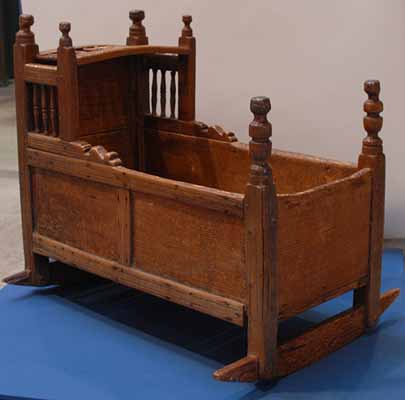
Pilgrim Cradle
They had to survive coming into the world, and what medical assistance was supplied to mother and child often did more harm than good.  Miscarriages and premature births often went unnoted, and in some communities, 30% of the children whose births and deaths were recorded died before their fifth birthday.

Young Mother's Tombstone
Hopefully the newborn’s mother would survive too.  It is estimated that 1 - 1.5% of pregnancies ended in the mother’s death, and throughout their lifetimes, 1 in 8 women died during pregnancy or childbirth.  A nursing mother passes crucial antibodies to her infant with the first milk produced after birth.  If she died, that child began life with a compromised immune system.  If the infant survived, it might be raised by another nursing woman – if one was available.

Three children in one tomb
A child who survived birth was taken to the meetinghouse a few days later for baptism.  In January, ice on the baptismal font would have to be removed first, then the baby was dunked in that frigid water.

Young children were assailed by disease, impure food and water, and accidents.  Cotton Mather, a Puritan minister in Boston, sired 15 children, 8 of which died before being weaned.  He wrote, "We have our children taken from us, the Desire of our Eyes taken away with a stroke."  40% of 17th century children did not become adults.

“In the midst of life we are in death” comes from the Book of Common Prayer.  Children learned that early, for they were often taken to public hangings for an object lesson in crime and punishment.  Funerals and wakes were held at home.  Hell awaited most children, or so they were told, for "their Hearts naturally, are a meer nest, root, fountain of Sin, and wickedness." (Benjamin Wadsworth)

Some cures were worse than the disease.  A child being treated for rickets (vitamin D deficiency) might be dosed with snakeroot and saffron steeped in rum, then dipped head first in cold water.  If that didn’t make the child sweat, “Let a little blood be taken out of ye feet…and that will cause them to sweat afterwards.”  Wearing wolf’s fangs might make the child’s teeth come in more easily, but that was less painful than scratching the child’s gums with an osprey bone.

The Capel family
Infanta Margarita
Both boys and girls wore linen gowns in their earliest years, similar to the one worn by Lady Capel’s baby.  When children were old enough to be ‘breeched,’ boys wore shirts & breeches like their father’s.  Girls were clad in miniature versions of their mother’s clothing.  Few children were so fortunate as to wear the stuff of the Infanta’s painting:

Boy Eating Porridge by Hals
Children ate and drank what their parents ate, including beer.  Milk was only available when cows had calves.  Water was considered to be an unhealthy drink.  Rightly so, when it was drawn downstream from a cow pasture or privy.

Girl With Broom - Fabritius
Childhood labor laws – what were they?  As soon as they were big enough to hold a broom, children worked alongside their parents.  They were not considered to be mouths to feed, but helping hands.  The more children a family had, the more likely that family was to prosper. 

Miss Campion with hornbook
In our country’s early days, formal education was a luxury for most boys, but it was sometimes available.  In 1640 Robert Lenthall was granted 100 acres of land in Newport, Rhode Island “for Encouraginge of ye poorer sort to trayne up their youthe in Learninge.”  The school was not successful, though, and Lenthall returned to England a few years later.  However, affluent children, both boys and girls, might be educated.  In this picture, Miss Campion holds a hornbook printed with the alphabet.

As early as age 10, many children were sent to work for another family, or were bonded to tradesmen as an apprentice.  An indenture could last a specific span, say, 5-7 years, until the age of 21, or perhaps until a girl married.  A boy could learn to be a tailor or cobbler, but there was great potential for abuse unless that child’s family was keeping an eye on him.

Children at Plimoth Plantation
Children did have some time for fun.  Marbles, tops, and pieces of ceramic dolls are turned up by colonial archeologists. King Charles I and his father both issued a Book of Sports, listing “lawfull Recreations and honest exercises” to be played “upon Sundayes and other Holy days, after the afternoone Sermon.”

Puritans were far stricter, but games for children were allowed – within reason.  In 1657, because several people had been hurt, boys who played “football in the streets” would be fined 20 shillings.  But they could play football, wicket, and other games on the Common.

17th century doll
Sampler by Loara Standish
Girls were taught household crafts, and perhaps that wasn’t as much fun as playing football.  But they also had dolls, including this early model.  It doesn’t look much like today’s Barbies, but with a dress, a painted face, and perhaps a wig, it would have provided a young girl with an hour’s entertainment.

It is clear from this blog that I have a liking for our country’s earliest days.  However, when I consider whether I’d rather have been a child in the 20th century, or the 17th, I am glad to have been born in modern days.

 
Sources:
Child Life in Colonial Days – Alice Morse Earle  1899
Customs and Fashions in Old New England – Alice Morse Earle  1893
Woman’s Life in Colonial Days – Carl Holliday  1922

Images:
Tombstones: personal collection
Velasquez’ Infanta Dona Magarita de Austria: http://www.wga.hu/html_m/v/velazque/10/index.html
Carel Fabritius’ “A Girl With a Broom”: http://www.traceyourdutchroots.com/art/bezem.html
Miss Campion with Hornbook: http://en.wikipedia.org/wiki/Hornbook
Sampler by Loara Standish: http://www.pilgrimhall.org/samplers2.htm

Monday, January 16, 2012

The Visible Woman


In my post of December 21st, I talked about invisible women during the 17th century, especially those wives whose unrecorded marriages left them unknown today.  So, if a woman’s name didn’t occur in vital records, or those records are lost, how did a woman become visible?

Anne Bradstreet.jpg
Some women left wills; others appeared in vital records.  A few who could write left their own records.  Anne (Dudley) Bradstreet’s book of poetry was published in 1650; the first work penned by a North American woman to be published.  Mistress Bradstreet’s work was notable, and perhaps she was protected by her position.  She was the daughter of Massachusetts’ governor, and no sensible man would criticize such a woman.

 The more typical attitude toward educated females is shown by Governor John Winthrop’s comment about a young woman who had “lost her reason” by “giving herself wholly to reading and writing.”  If she had not meddled in “such things as are proper for men, whose minds are stronger, she [would have] kept her wits, and might have improved them usefully and honorably in the place God had set her.”

Anne Hutchinson.jpg
Even such towering women as Anne (Marbury) Hutchinson and Mary (Barrett) Dyer left few recorded words.  The educated Mistress Hutchinson held her own meetings to discuss the sermons of Boston’s ministers.  Soon her followers nearly upended the Puritan’s government, leading to the banishment of Anne and her family, and the ouster of many other Massachusetts residents.

Mary Dyer helped bring the Quaker faith to New England.  For that she was also banished from Massachusetts, and was hanged in 1660 for defying that banishment.  But the only written works left by Mary are two letters written to the Puritan government before her hanging.  Nothing at all survives of Anne Hutchinson’s actual words, only a few brief phrases recorded during hearings preceding her banishment and excommunication.

Both Anne and Mary were remarked upon by Governor John Winthrop in his journal.  Anne and her supporters’ near-rebellion filled several pages, and Winthrop remarked upon her life in Rhode Island many times.  When Anne was cast out of the Boston church, Mary left the meeting house arm in arm with her friend, and Winthrop noted that event.  He also wrote about Mary’s miscarriage in gruesome detail – a monster borne by a woman with monstrous notions.

stocks.jpg
Thus we see that the most visible women in 17th century New England were those who got into trouble.  Even when they appear in the court records for lesser events we see their names, and sometimes we can learn quite a lot about them.

A significant portion of colonial records is filled with men and women in trouble.  Theft, adultery, social disorder, even murder were fairly frequent occurrences and women were often the criminals in question.  We might not learn a woman’s maiden name from these records, but sometimes they give her husband’s name along with information about her crime and punishment.

Herodias Long is a perfect example of how a woman can become visible.  If it weren’t for her numerous court appearances, we would know her only from a couple of land records.  In November 1664 George Gardner Jr. and his older brother Benoni were granted land in Rhode Island’s Pettaquamscutt Purchase.  That land was bounded on one side by Horad Long, but the deeds do not note that Horad was the mother of the young men, using a shortened form of her first name and her maiden surname.

 When John Porter, her third domestic partner, sold land between 1671-74, Horad Porter gave her consent.  Earlier land records for her first husband, John Hicks, and second partner, George Gardner, do not mention her at all.

So, how do we know that Herodias was married to those men?  She requested a divorce from both of them.  In 1644 Harwood Hicks was separated from her abusive husband, John Hicks.  We don’t learn much about her from those records apart from her name, but twenty years later, she petitioned the government for a divorce from her second “husband,” George Gardner, saying that they were not married, and that sin was weighing on her conscience.

Puritan wedding.jpg
Perhaps looking for sympathy and support for her youngest child, Herodias gave her life history.  Using her maiden name, Horod Long said that she was married at the age of thirteen at the church of St. Faith’s-under-Paul’s in London, that the Hicks family then came to Weymouth, Massachusetts for 2 ½ years, then relocated to Newport, Rhode Island.  She noted her separation from John Hicks, then said that she had not formally married George Gardner, and that omission was weighing on her conscience.

This sort of record is the sort that genealogists and historians dream about, and lets us trace this illiterate woman through most of her life.  If not for her troubled domestic life, Herodias would have remained nearly invisible, just another name written in fading ink on ancient parchment.

Wednesday, December 21, 2011

The Invisible Woman

Visible woman.jpg
No, not the Visible Woman, which was one of my favorite educational toys in the 60s.  Though she is most revealing, I am talking about Invisible Women.

Pilgrim compact.jpg
Do you see any women in this painting?  Just that lady hovering off to one side.  In real life, she wouldn't even have been in the room,  because women played no part in colonial New England governments.  Information about individual women in those days can be hard to find.  Anyone who has researched their genealogy knows what I’m talking about.

New England Marriages.jpg
Let’s look at a page of Clarence A. Torrey’s “New England Marriages Prior to 1700.”  This genealogists’ reference lists names and marriage dates for men and women who wed in New England, or before they crossed the Atlantic.  These couples fill 848 closely-spaced pages.

I conducted an experiment, using page 443 for a (hopefully) typical example.  On that page we find 56 New England men who were wed to 46 women between 1620 and 1700.  If you wonder why there were 56 men and 46 women, I counted  second and third marriages.  Of those 56 men, only one first name is questioned.

As for those 46 women, 33 were identified by their first and surnames (3 surnames are questionable).  9 are known by their first name only.  The final 4 women’s names are completely unknown.  So, on that page of his master work, Torrey could fully identify 98% of the men, but only 77% of their wives.  About 17% of the women are known by their given names only, and nearly 9% are completely unidentified.  Why such a difference?

Puritan worship.jpg
Women and men led different lives.  Both worked hard every day of their lives, to be sure, but it was men’s names which filled the record books.  They paid the taxes, served in the military and government, voted, and owned the land.  In most places women could not own land if they were married; their husbands did.

Wives might be found in church records - if those books survived four centuries to be read by genealogists.  Women were mentioned in wills, but few left wills of their own.  Their names might be entered on their babies’ birth records, but often it was just the father’s.  If the family was affluent enough, you might find a gravestone.


gravestone.jpg
Vital records were kept in many New England towns from the start.  Combined with church and probate records, they provide genealogists and historians with names and dates for births, marriages, and deaths of most of the women on page 443 of Torrey.  Many of New England’s precious records have survived.

Some towns weren’t so lucky.  Newport, Rhode Island, watched its vital records, deeds to land, and probate records sail away in British hands during the Revolutionary War.  Those records were returned to Newport years later, soaked and illegible after they were accidentally sunk in New York City’s harbor.

Consequently, many of Newport’s pre-Revolutionary women simply disappeared.  In the Rhode Island Genealogical Dictionary by John O. Austin, I examined 56 Newport men who were known to have married 63 women.  (I have no doubt that many of them made second and third marriages which were lost along with Newport’s records)

52 of those women’s first names have been found, but surnames of only 17 are known.  Therefore, only 27% of those 63 women can be traced to their parents by today’s genealogists.  Sadly, 11 of those 63 wives are completely unknown.  Nearly 20% of our pre-Revolutionary ancestresses from Newport are lost.

Puritan woman at work.jpg
Birth records everywhere once have linked a girl child with her father – and perhaps - her mother.  The entry of a marriage in the church or town books may have recorded the union of husband and wife.  Men left legacies to their beloved wives, but if those records are lost we may never know the identities of these women.

That is how some women become invisible in colonial New England.  How do they become visible beyond mere vital statistics?  That is another story, and will be my one of my next topics.

Friday, November 11, 2011

Herodias/Harwood (Long) Hicks vs John Hicks: A New Transcription

Herodias/Horod/Harwood Long is the protagonist of my historical fiction novel, A Scandalous Life: Rebel Puritan.  One of the most notorious women in 17th century New England due to her stormy domestic life, Herodias was separated from John Hicks after requesting Rhode Island's first divorce because of his abuse.

On December 3, 1643    Herodias complained to Rhode Island’s governor that her husband was beating her.  Probably she intended to have her petition heard by the General Court sitting in Newport at that time, but the Hickses' case was apparently not aired until the next spring.

Though Herodias and John Hicks were separated in some time after March 1644, Herodias’ accusation was not entered into the Rhode Island colonial records until 1655, when George Gardner was charged with keeping John Hicks’ wife as his own.


The following document from the Rhode Island colonial records was transcribed by Josephine C. Frost for her article, "John and Harwood Hicks," which was printed in 1939 in the New York Genealogical & Biographical Record, Volume 70, pg. 116.  The article was missing a few words and phrases, but with the help of a 100-year old dictionary, I was able to supply them.  Words differing from Josephine Frost's transcription are in boldface:

"
This witnesseth tht in the yeare 1643, decemb. the 3d/ Harrwood Hicks, wife to John Hicks, made her Complaint to us of Many greevances, & Exstreeme violence, that her Husband used towards her, uppon which she desired ye peace of him uppon ye Examination whereof we found such due grounds of her Complaints by his Inhumane & barbarous Carriages such Crewell blows on Divers parts of her body, with many other like Cruelties, that we fearing the ordenarie & desperate afects of such barbarous Cruelties, murthering, poysioning, drowning, hanging, wounds & Losse of Limbes, Could not but bind him to ye peace, Moreover we found him soe bitterly to be Inraged, & soe desparate in his Expreshions, uppon which the poore woman fraught with feares, Chose Rather to subject herselfe to any Miserie than to Live with him; He also as desirous thereof as She, Solicited us to part them, with much Impretunyty we therefore diligently observing & waighing, ye prmeses Conceived & Concluded, that it were better, yea farr better for them to be separated, or devorced than to Live in such bondage being in such parfect hatred of  one another, & to avoayde & prevent the said desperate hazards premised, yet observing & knowing how Odious this act was amongst men, Refused to order theire separation, but tould them theire act should be theires wherein if they agreede we would be witnesses thereof uppon which they Came to an accord, & declared it to us which Accordingly we doe testifie the same, being perswade that god had separated them soe Inmeewtablie, that they were free from that marriage bond before god, Now we being Majestrates in this place, & in Commission for ye peace, & by order we are to walke accordinge to ye Lawes of England, under grace of our Soveraigne, had no direct Rule to walke by to devorce them did therefore under grace by our Authoritie declare them duly separate in wittness where of we therfor sett to our hands this is a True Coppie Pr me

Wm. Lytherland
Record[er]


[witnessed by]
William Coddington
John Coggeshall
Nicho. Easton
Related Posts Plugin for WordPress, Blogger...